Sacred Groves
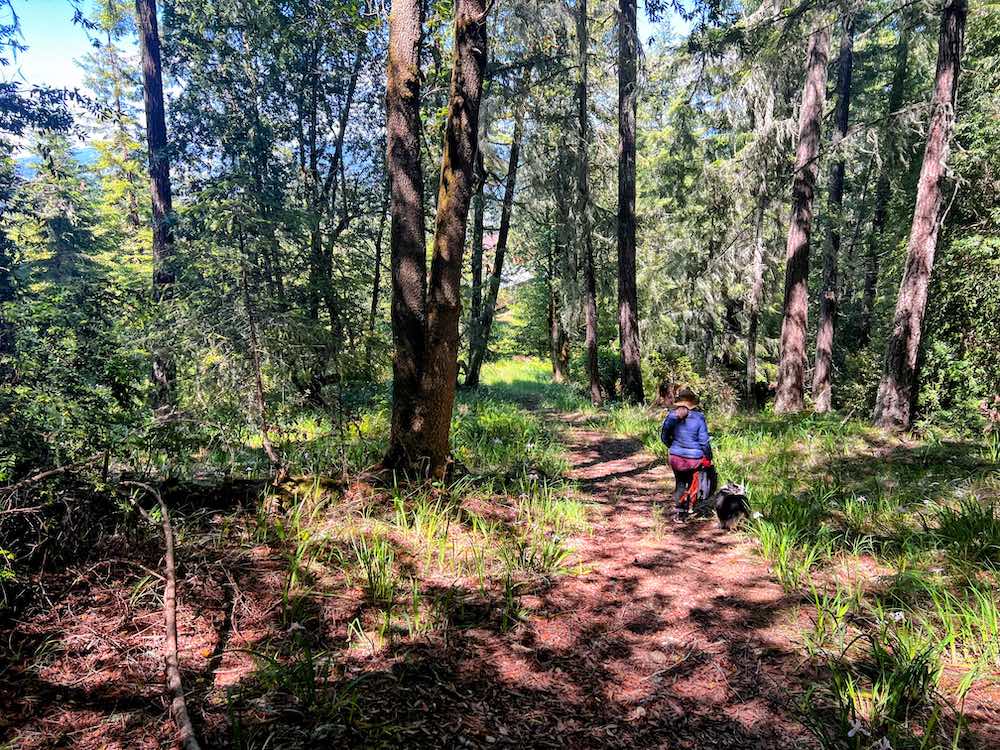
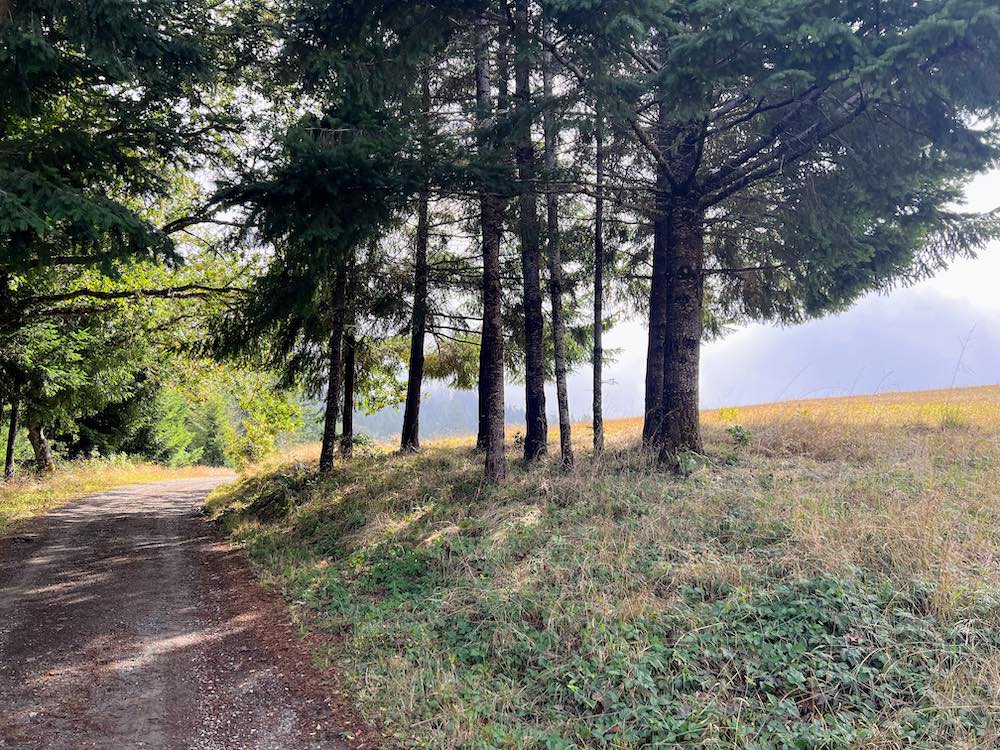
Sacred Groves is located on a ridgetop prairie and oak–conifer woodland within the traditional territory of the Mawenok people.
In the community now known as Kneeland, historical research shared by historian Jerry Rohde tells us that this land was part of the seasonal homeland of the Mawenok, who journeyed here each spring from their winter villages along the Badawa’t (Mad) River. In these upland prairies and forests, they hunted elk and deer and gathered foods that sustained them, including tanoak acorns and edible bulbs such as brodiaea and blue camas.
The land we steward today was shaped by their presence, knowledge, and care for countless generations.
Remembrance and Care
Sadly, information about the Mawenok is scarce, and there are no known descendants. What is documented primarily comes from field notes taken in 1906 by UC Berkeley anthropologist Pliny Goddard. We know that when John A. Kneeland and his sister Mandana established a homestead here in 1850, the Mawenok resisted this intrusion onto their territory by burning down structures and killing livestock. John and Mandana retreated back to town, and then John returned to the site three years later with his brother G.B. Kneeland to rebuild.
As we develop Sacred Groves as a conservation green burial and spreading site, we do so with deep respect for the Mawenok people. We recognize that conservation, remembrance, and burial are inseparable from truth-telling, responsibility, and care.